Proud Women Who Are Making Amazingly Positive Changes in Aviation
Discover the Felts Field Sky Queens
JULY 2025
Safety First
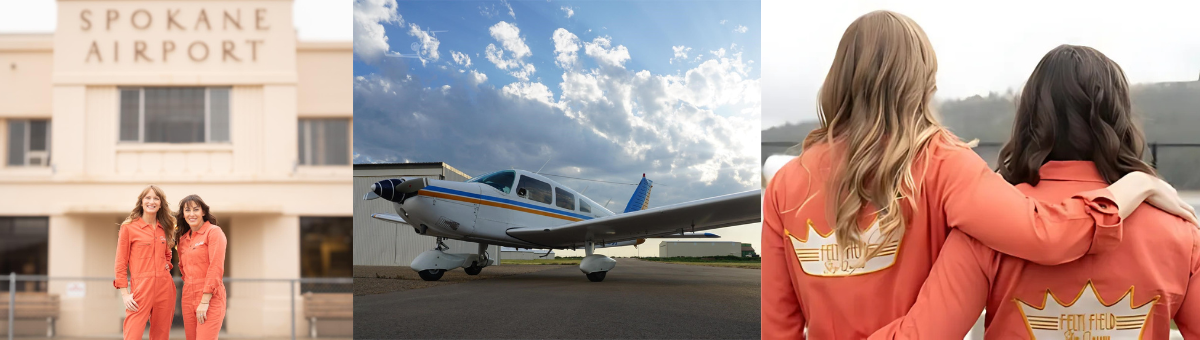
Within the classic cockpit of a sleek Piper Cherokee 235, affectionately called the Balvenie, the Felts Field Sky Queens do a preflight prior to takeoff, all with precision and a sense of calm. The checklist flows like a well-rehearsed movie script: “Fuel is good. Avionics on. Brakes are set. Door is latched.” The engine hums, the propeller blurs into a spinning halo, and with a confident nod to their passengers, pilots Rachel Skirvin and Sarah Roark power up the aircraft. “Safety first and have fun,” Skirvin proclaims, sporting a stern grin. “If we’re not doing both, what’s the point?”
Transcontinental Competition
Skirvin and Roark are not simply pilots; they are true pioneers, blazing across the country to reshape perceptions of women in aviation. Competing in the 48th Air Race Classic—an all-female, transcontinental competition with roots tracing back to the 1929 Women’s Air Derby—these two highly focused Spokane-based aviators are flying not just for a successful outcome, but for greater visibility.
Finishing the Legendary Race
Their impressive team, the Felts Field Sky Queens, is one of just over 40 competing in this year’s event. Yet what sets them apart is more than just their home-turf advantage. This year’s 2,400-mile route originates in Fairhope, Alabama, ultimately concluding at Felts Field in Spokane, Washington—offering Skirvin and Roark the rare honor of finishing the legendary race on their own hometown runway. Their unique call signs—Glitter Trix and Jet Pink—speak to their rare combination of technical skill and fearless femininity.
Second Careers, Remarkable Skills
Both women entered aviation as second careers—an unusual path in a world typically dominated by lifelong flyers. Skirvin, 39, was formerly a healthcare finance manager, and Roark, 41, is an archivist and technical writer. But life’s surprises—and a strong desire for purpose—led them both to take flight.
Juggling Work and Family
For Skirvin, the decision arose amid the upheaval of the COVID years. Feeling the burden of a desk-bound career and a burning desire to lead by example for her children, she embarked on a discovery flight—and was immediately hooked. She quietly completed ground school at night, juggling work and family life, until she earned her wings. Now, as a certified flight instructor (CFI) working toward her dream of flying for Life Flight Network, she imparts hard-earned knowledge and skills with students who, like her, may not fit into aviation’s typical mold.
A Multigenerational Flying Family
Roark, in stark contrast, long resisted a future seemingly etched into her DNA. A member of a multigenerational family of aviators, she first opted for the library over winged flight. But a return to flying in 2018 reignited her true passion. In only nine months, she achieved instrument, commercial, and multi-engine certifications—milestones her partner Skirvin calls “absolutely insane.” Today, Roark pilots a private French jet for a Spokane millionaire while closing in on the hours demanded to fly commercially for Alaska Airlines.
The Perfect Race
The Air Race Classic is far more than a test of raw speed. Each team receives a customized handicap—a baseline, as it were, for what constitutes their aircraft’s “perfect race.” Competitors are judged as to how well they fly to that benchmark. The Sky Queens’ Cherokee 235 has more horsepower than most of the planes on the field, but precise aviating, not power, will determine their standing in the competition.
First Plane Across the Finish Line
Still, Skirvin and Roark have an unspoken goal: to be the first flyer across the finish line, even if the race’s scoring is not driven by the fastest touchdown. They intend to complete the route in just two days—a formidable target in a race built to span four.
Female Pilots Engaging with Community
All said, the Sky Queens understand that the true mission goes well beyond competition. The race concludes just ahead of Felts Field’s Neighbor Day, a public local aviation celebration where the team will join in with dozens of other female pilots to engage with the community, inspire young aviators, and showcase a field still marked by gender imbalance.
Rigorous Training and Strategic Planning
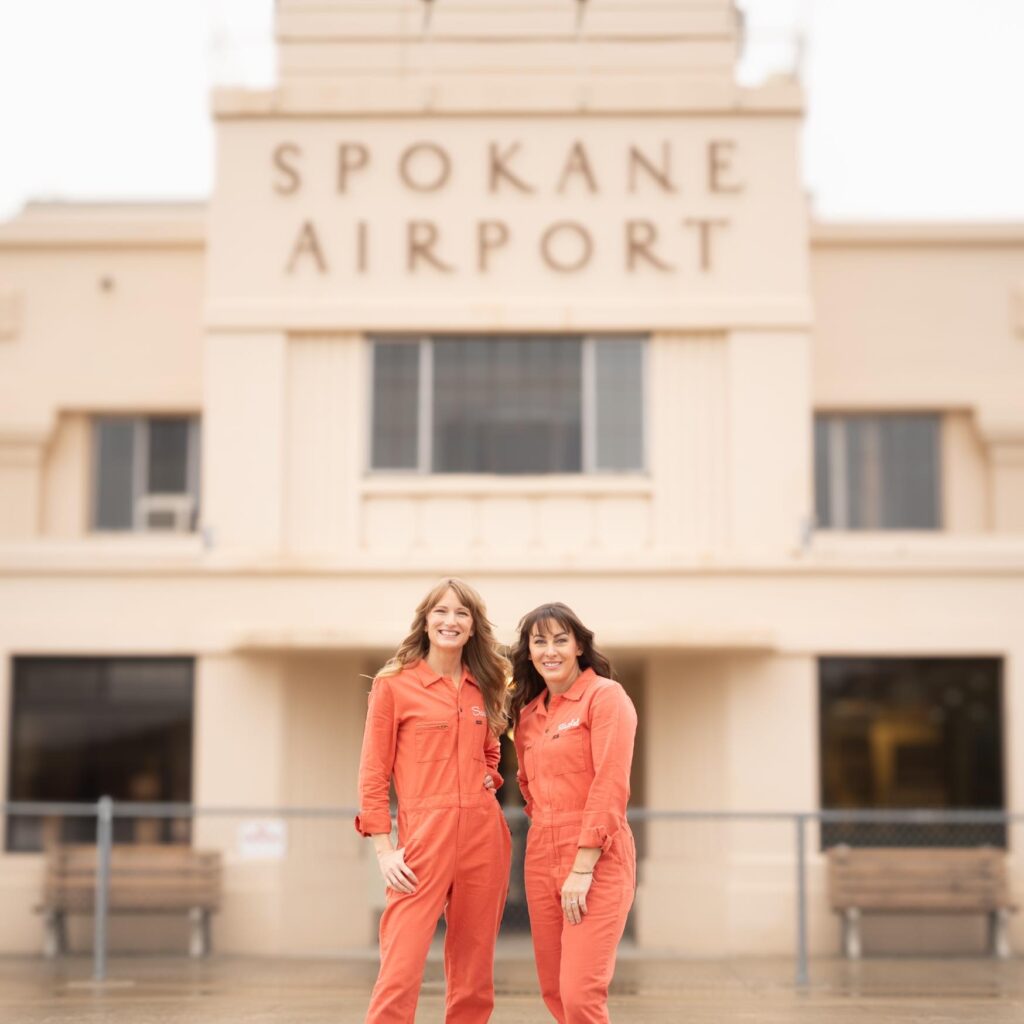
Do not let the matching bright pink flight suits and beaded bracelets fool you—these women are warriors of the sky. Behind the glitter are many hours of tough training and complex planning. They have been trained in high-altitude survival, completed challenging simulations at Washington State University, and prepared for disorienting conditions like vertigo that could jeopardize the safety of flight.
Protocol
Their flight gear reflects just such reality: oxygen canisters, salt packets, energy drinks, as well as checklists that begin with, “Are we good?” The idea is clear: no race is worth more than a teammate’s safety. They even have a protocol for addressing errors while in flight. “You get 90 seconds to sit with a mistake,” Skirvin says. “Then you move on.”
Sky Queens
As Women in Aviation International President Lynda Coffman said earlier this year, “We will not stand for our accomplishments to be erased.” The Sky Queens are living that resistance, proving that representation is not optional, it’s essential.
Disproportionate Scrutiny
Both pilots have sometimes faced doubts, dismissal, and unfair scrutiny due to gender. Tears in the cockpit were thought to be a sign of weakness. Mistakes were marked as indictments. But rather than folding to pressure, they have turned it into energizing fuel.
“You have a burden of proof,” Skirvin says. “You have to be better, sharper, tougher.”
And so, they are tougher in mind, stronger in resolve, but never afraid to bring their whole beings to the flight deck. Their music playlist, “Glitter Trix and Jet Pink Jams,” is chock-full of bold, unapologetic tunes. Rihanna, Taylor Swift, Chappell Roan. Girl power, at full volume, thousands of feet above the earth.
Build a Runway
As Amelia Earhart, an iconic aviation pioneer, was once quoted as saying, “Some of us have great runways already built for us. But if you don’t, realize it is your responsibility to grab a shovel and build one.”
With every air mile logged, Skirvin and Roark are building that runway for themselves, for the next generation of women pilots, and for the idea that the sky above should be available to everyone with a genuine love of flying. As their aircraft tracks over Lake Coeur d’Alene or skirts the Rockies, the message is resoundingly clear: they are not asking for permission. They are already airborne and bringing a bright future with them. The thrill of flying is quickly becoming within reach of everyone, as it should be!