Beyond the Big Doors: The Mysterious Architecture of Modern Aircraft Hangars
How Does Hangar Design Reflect Innovation in Aviation Architecture?
Structures in Modern Aviation That Deserve More Credit
When we hear of the latest in aviation technological innovations, the image that comes to mind is almost always the same: a sleek, shiny jet piercing the clouds with such ease, the product of aerodynamic creativity and ingenuity, as well as state-of-the-art materials that are strong and lightweight. But behind every eye-catching jet that takes to the sky stands the unsung structures that make the magic of flight all the more possible — the fascinating aircraft hangar.
Sophisticated Climate Systems
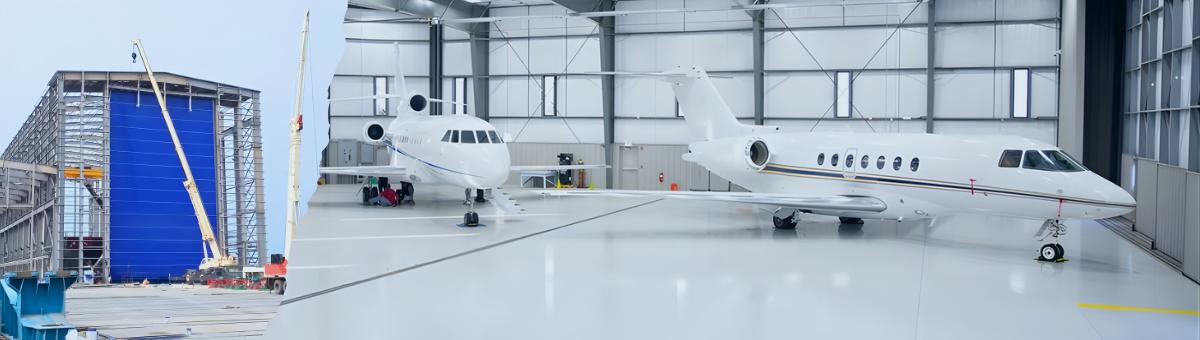
These cavernous cathedral-like spaces rarely get a hero’s welcome. Yet they are truly engineering and architectural works of art, designed to house and protect the world’s most complex and costly flying machines. From huge support spans that seem to defy gravity to sophisticated climate systems that maintain clinical-level cleanliness, hangars are where architecture and design quietly reflect the very spirit of flight.
Showcasing Advances in Aviation
Welcome to the mysterious world of aircraft hangar design — where hardened steel, wide open space, and imagination merge into perhaps one of the most captivating aspects of aviation architectural creation. Aircraft hangars evolved from simple wooden shelters or huts in World War I to quickly become massive steel and concrete mega-structures, highlighting advances in aviation, engineering, and military innovation.
From Canvas to Colossus
During the early 1900s, when aviation pioneers like the Wright brothers were flight testing fragile biplanes, “hangars” were nothing more than glorified tents — wooden frames draped with flimsy canvas, barely winning the never-ending battle with unpredictable wind and the elements. But as aircraft became larger, heavier, faster, and militarily essential, those basic early-day shelters gave way to something far more interesting and useful.
Able To House Entire Bomber Fleets
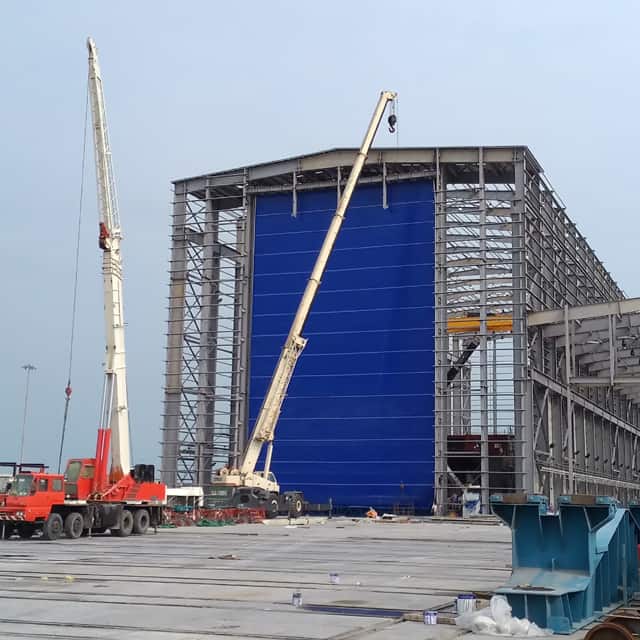
In fact, by World War II, airplane hangars had morphed into gigantic steel and concrete structures easily able to accommodate entire bomber fleets. These buildings were clearly feats of engineering genius, boasting long-span trusses stretching hundreds of feet, void of the once familiar interior support columns. Massive doors would now slide open like towering theater curtains. The ongoing architectural challenge was always the same one that aircraft had always faced: how to build structural strength without adding burdensome weight.
Influencing Industrial Design
What was the solution? As always, innovation. Designers borrowed from the latest in bridge construction, experimenting with bowstring style trusses and uniquely arched roofs. The result was not just bigger hangars but new architectural creations that would go on to influence industrial design, sports stadium roofs, and even modern airports.
Scale That Routinely Exceeds Imagination
To grasp the sheer scale of a modern aircraft hangar, imagine standing inside Boeing’s iconic Everett airplane Factory in Washington — the undisputed most colossal building on the planet by actual volume. It’s so gigantic in height and span that, on occasion, weather clouds have formed in proximity to the ceiling. Inside, huge heavy category aircraft — including the B747, B777, and B787 Dreamliner — are assembled all under one roof.
Extreme Engineering and Innovative Concepts
Such a scale requires extreme engineering and outside-the-box innovative concepts. A hangar’s “clear span” must make way for wide wingspans without a single column obstructing aircraft movement. Structural engineers, as a standard, incorporate advanced modeling to determine how to distribute loads more evenly across long interior distances. Wind, snow, and even seismic stresses must all be accounted for — because when a roof covers 100 acres, even a small miscalculation can become a big problem, rather quickly.
The design philosophy is in line with that of aircraft engineering: lightweight structures that achieve strength through complex geometry, cutting-edge materials, and careful precision. Every truss, joint, and support is planned to the last intricate detail.
Experience a Unique Microclimate
Step inside a large-scale modern maintenance hangar and immediately feel the subtle hum of an ecosystem all its own. The air isn’t just clean — it’s filtered, tempered, and perfectly balanced. Aircraft are surpassingly very sensitive to their immediate environment. Exterior paint can blister and separate in high humidity. Also, composite materials easily warp with temperature variations. So, hangars today are intended to be like climate-controlled laboratories. HVAC systems keep precise temperature and humidity levels across football-field-sized interiors.
The Continuous Movement of Air
The specialized hangars used for painting aircraft take this idea even further. It involves laminar airflow — a system that allows for the smooth, continuous movement of air — to ensure that no dust particles adhere to an aircraft’s outer fuselage. Advanced filtration systems capture volatile organic compounds (VOCs), protecting both workers and the environment.
Smartly Designed Translucent Roof Panels
It’s not only about the aircraft — it also has a lot to do with sustainability. Hangars like the Dassault Falcon Maintenance Centre in France use smartly designed translucent roof panels to capture, diffuse, and disperse natural light, while others use solar arrays and opportunistic shading systems. The next generation of airplane hangars is proving that efficiency and environmental responsibility can work comfortably side by side.
Quickly Adaptable by Design
One of the clearly defining markers of today’s contemporary hangar architecture and design is adaptability. As aircraft evolve, so must these essential protective shelters.
Modular style construction techniques allow hangars to be expanded or reconfigured without labor-intensive major reconstruction. Easily movable partitions, modular steel frameworks, and retractable doors allow for outstanding flexibility across different aircraft types and sizes — from nimble business jets to double-decked beasts like the Airbus A380.
Of note, military hangars demand rapid deployment capabilities. Prefabricated tension-membrane hangars can be assembled in just days, providing shelter at remote airbases or in disaster zones. These lightweight and ultra-durable structures reflect a new philosophy: hangars as living, breathing systems that can rapidly adapt to changing missions and demands.
Like the aircraft they are built to protect, today’s hangars are no longer static — they are designed for flexibility, maximum protection, and change.
Cutting-Edge Materials Are a Game Changer
The evolution of materials used in hangar construction tell a story of modern architecture in somewhat of a microcosm. Steel remains the core and backbone of most permanent hangars, but designers are always experimenting with composites, membranes, and alloys that combine strength, durability, and light weight.
Some of the world’s most visually pleasing hangars use something known as tensile membrane structures — thin, high-tech fabrics stretched exactingly across steel frames. These materials, like ETFE and PTFE-coated fiberglass, are translucent, self-cleaning, and remarkably strong. They create bright, luminous interiors flooded with rich daylight, reducing the need for artificial lighting while adding a vibrant glow to the aircraft living inside.
Carbon-fiber reinforcement and aluminum alloys are now also being deployed in structural components, echoing the materials of the planes themselves. The result is a fascinating aesthetic symmetry: the architecture and its occupant, cast from the same technological DNA, as it were.
The Hangar with a Digital Twist
The digital and AI revolutions have transformed the very way hangars are designed, built, and operated. Architects and engineers now use something called Building Information Modeling (BIM) to create detailed 3D simulations of every system — structural, mechanical, and environmental — before hangar construction ever begins.
Computational Fluid Dynamics (CFD) modeling gives designers the opportunity to visualize the way in which air will flow around and inside the interior of the hangar, ensuring that temperature and humidity remain stable even when the massive doors are driven open.
Once fully constructed, hangars are quickly becoming “smarter.” Embedded sensor systems monitor and track temperature, structural stress, and energy use in real time. Maintenance crews can then observe building performance on digital dashboards, making data-driven adjustments to better optimize overall efficiency.
In simple terms, hangars are quickly becoming intelligent and essential companions to the flying machines that they house and protect — communicating, adapting, and evolving through large amounts of shared data and metrics.
Function Merges with Expression
While hangars are, at their very core, highly functional structures, many now double as genuine architectural statements.
Commercial airlines and aircraft manufacturers see their hangars as symbols of innovation and brand identity. The Emirates Engineering Centre in Dubai, for instance, features large sweeping glass walls and sculpted metal forms that mimic the shape and lines of an aircraft wing. Private jet operators commission boutique hangars that resemble luxury showrooms, complete with lounges, sound systems, artwork, and mood lighting.
The modern hangar has emerged as a canvas for architectural expression — part workshop, part monument. Its grand scale and minimalist geometry give it a silent grandeur that rivals even the best-known museums or concert halls.
There’s even a poetic aspect to it all. The instant a hangar’s doors slide open, and a jet rolls out into the daylight, the feeling is almost ceremonial — a transformation, if you will, from a sleeping winged machine to suddenly a flying work of art. In that sense, the hangar is a bridge joining two distinct worlds: the ground-based realm of structural architecture and the infinite domain of manned powered flight.
Building for a Greener Sky
As aviation comes to terms with the sustainability reality, hangars are evolving into critical spaces for positive environmental change. Architects are reimagining these specialized structures as net-zero ecosystems — buildings that generate their own energy, recycle water, and greatly reduce unwanted emissions.
Green roofing systems, solar collection façades, and geothermal systems are increasingly merged into the latest hangar designs. Some experimental structures use bioclimatic concepts, drawing inspiration from natural systems to better regulate temperature and airflow. Others integrate simple rainwater harvesting and on-site wastewater treatment and management.
Even the building process is being revolutionized. 3D printing, robotic assembly, and modular prefabrication are minimizing waste and accelerating construction times — crucial in an industry determined to lower carbon output.
The hangars of tomorrow may indeed function as autonomous, self-sustaining work and recreation habitats — intelligent, adaptable, and deeply integrated into the environmental fabric of the various airfields that they serve.
The Grounded Architecture of Flight
It is a given that hangars never take flight, but they embrace a similar daring spirit that makes flight possible. Their sweepingly expansive spans and precision systems speak to a bigger story of human ingenuity — one that plays out not in the stratosphere, but on ground, making the wonders of aviation increasingly possible.
So, the next time you spot a jet, regardless of its size, taxing into a hangar, take pause for just a moment. Beyond those giant, heavy doors lies a world of true design and engineering brilliance.
About APN
Identifying an aviation property or hangar attached property opportunity is easy with the guidance and assistance of APN (Aviation Property Network). This premier aviation realty organization has on staff dedicated and experienced real estate professionals that work with both buyers and sellers of aviation properties.
APN will list your commercial or residential property for sale, lease an aviation property, or rent overnight. The company website is host to a large international database of aviation real estate deals and opportunities. From undeveloped aviation land to airport businesses and live-work style airplane hangars, APN features the best aviation property investments on the market today.
Interested in buying or selling an aircraft hangar, moving to an airpark fly-in community, buying or selling an FBO, or perhaps even developing a new aviation-related project? Work with a true leader in worldwide aviation property sales today! Contact APN NOW!