Amelia Earhart: The Search Continues. This Time to Nikumaroro Island
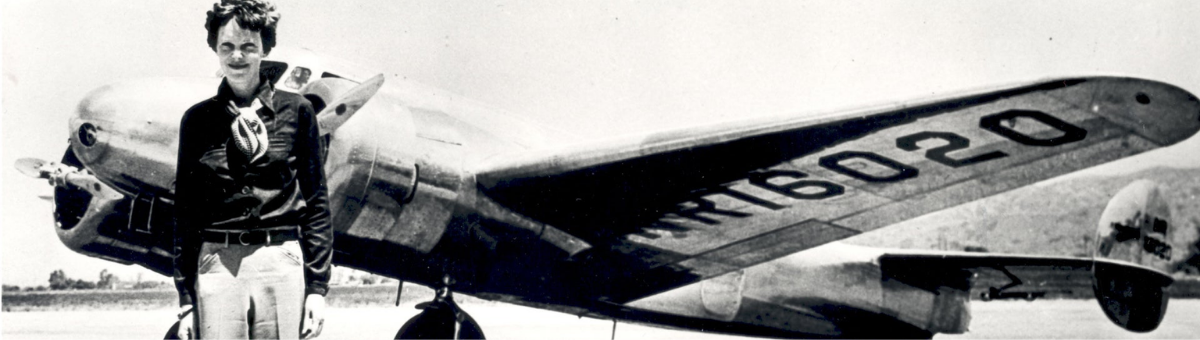
Amelia Earhart disappeared on July 2, 1937. This year is the 88th anniversary of her pioneering flight around the world with Fred Noonan. Unfortunately, it ended with Amelia and Fred’s disappearance over the Pacific Ocean. Amelia’s goal was to become the first woman to fly around the world, and if she had succeeded, she also would have been the first person to fly 29,000 miles around the world. Let’s explore Amelia’s adventurous flight and what’s happening in 2025 that could find her plane and solve the mystery.
Amelia’s Decision to Fly Close to the Equator
Before Amelia’s fateful flight, there were other flights around the globe. The most notable one was in 1924, when eight US Army Air Service officers flew 27,550 miles around the world. Seven years later, Wiley Post and his navigator, Harold Gatty, flew around the world. Then, two years later, Wiley completed a solo flight around the world.
However, those flights were different than Amelia’s. They took a northerly route over Alaska and Siberia. Their goal was to avoid long flights over open water where there are few, if any, landmarks. However, they traded open water for unpredictable winter weather that could include freezing temperatures, ice, strong winds, turbulence, fog, and low visibility.
Amelia wished to avoid those scenarios, so she planned a southern route that took her close to the equator. If she completed her flight, she’d become the first woman to fly around the world and the first person to fly 29,000 miles around the globe.
Unfortunately, Amelia and her navigator lost their bearings while flying from Lae to Howland Island. Amelia and Fred haven’t been seen since, but new satellite images indicate that her famous Lockheed Model 10 Electra might be in the lagoon on Nikumaroro Island. Let’s explore this new chapter in the Amelia Earhart disappearance.
How Many Miles Had Amelia Earhart and Fred Noonan Flown on Their Around-the-World Flight Before Their Disappearance?
Amelia and Fred had navigated roughly 22,000 miles of their planned 29,000-mile, round-the-world journey, and at the time of their disappearance, they had been flying for 31 days. Their entire planned trip consisted of 34 legs, and they were on leg 31. Ironically, leg 31 was also considered the riskiest of all their legs due to the fact that most of the flight was over open water.
Amelia’s Heavily Modified Lockheed 10 Electra
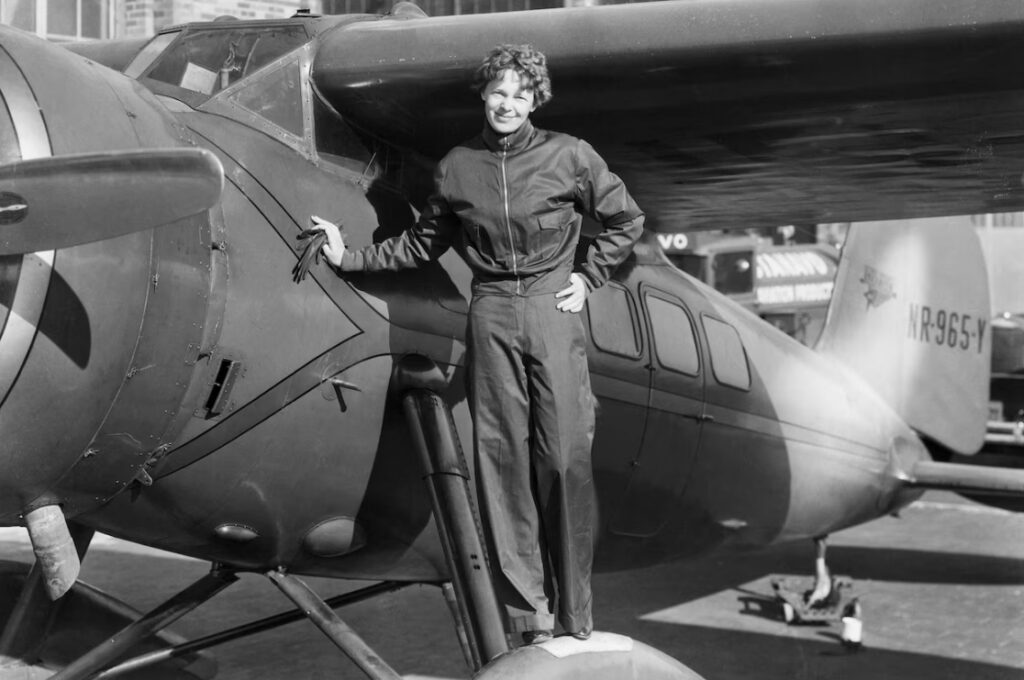
Amelia wasn’t flying a stock Lockheed 10 Electra. At that time, Lockheed 10 Electras were used for passenger transport. In fact, they were one of the first commercial airliners. They could carry up to 10 passengers and two crew members. The airliners could hold 194 gallons of fuel, and they had a range of 810 miles. Of course, those specifications weren’t good enough to get Amelia around the world, especially with her long hauls over open water.
Instead, she was flying a heavily modified Lockheed 10 Electra that was nicknamed the ‘Flying Laboratory.’ Amelia’s airplane had been heavily upgraded with funds from Purdue University so that she could complete her historic flight.
It also had components for additional aeronautic research, which were to be put into use after the global flight. In other words, Amelia and Purdue University had high hopes for the flight and long-term plans for the aircraft.
One of the most important modifications to the Electra was the additional fuel capacity. Amelia’s twin-engine airplane was modified to be able to carry 1,100 gallons. In order to complete that task, the engineers at Lockheed removed many of the cabin’s windows so that they could install additional fuel tanks inside the fuselage. This gave the Lockheed an impressive maximum range of 4,500 miles under ideal conditions.
Other modifications included fitting the aircraft with a dedicated navigator’s station for Fred Noonan and installing the most technologically advanced communications equipment for the time. Amelia’s Lockheed 10 Electra was fitted with a Model 13C radio transmitter and a Model 20B receiver. Those units were manufactured by Western Electric. The modifications also sought to make long-distance flying more comfortable for the pilot, so the airplane was also fitted with a Sperry Gyropilot automatic pilot system.
Where Is Nikumaroro Island, and Why Did Amelia Plan a Refueling Stop on Howland Island?
Nikumaroro Island is about 400 miles southeast of Howland Island, which was chosen as a landing spot because it’s located halfway between Lae, New Guinea, and Honolulu. This particular leg of Amelia’s trip was 2,560 miles. For this particular part of her round-the-world flight, Amelia calculated a reserve of 200 gallons, which is roughly four extra hours of flight time for the estimated 18-hour flight.
Amelia calculated that her Electra would burn roughly 50 gallons an hour, and she would maintain an average ground speed of 140 mph. Unfortunately, it’s believed that she encountered strong headwinds that reduced her groundspeed from 140 mph to 110 mph. She sent a position report after flying for seven hours and 20 minutes. In that report, she stated that she was 800 miles off the coast of Lae.
If she were adhering to her preflight calculations, she should have been closer to 1020 miles from Lae. This situation becomes more dire when you consider that at 110 mph, her trip would take just over 23 hours instead of the 18 she had calculated. With those numbers, she would have needed an additional 250 gallons of fuel to complete her flight, or about 50 more gallons than she had estimated for her reserve.
What Happened After Amelia’s Last Official Message?
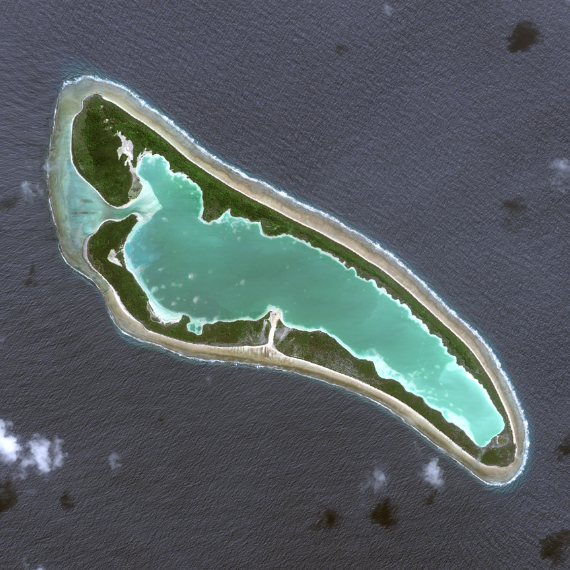
Amelia is now believed to have landed on Nikumaroro Island, which is larger than Howland Island. To put that in perspective, Howland Island is 1.4 miles long and .55 miles wide. By contrast, Nikumaroro Island is 4.7 miles long and 1.6 miles wide. Now, imagine trying to find an island in the middle of the ocean that could potentially be traversed on foot in 20 minutes while flying at an altitude of 1,000 feet and trying to determine if the land mass you’re seeing is actually land or a reflection from the sun. It was a difficult task, to say the least.
To help her find the island, a US Coast Guard ship, the Itasca, was sent to the island to help provide radio support, and as Amelia approached the island, the ship attempted to make radio contact. However, it was only partially successful. The Itasca received messages from Amelia about being low on fuel and having difficulty finding the island. The crew of the Itasca attempted to pinpoint her location but was unsuccessful. It’s also not believed that Amelia and the Itasca established meaningful two-way communications. However, the Itasca did, at one point, ask Amelia to provide Morse code dashes, and the HMS Achilles and SS New Zealand, which were in the area, reported hearing the response dashes.
Amelia’s last official message was heard as “We are on the line 157-337. We will repeat this message. We will repeat this on 6210 kilocycles. Wait…”
Additional messages are believed to have been heard by other radio operators and civilians, including “Plane down on an uncharted island. Small, uninhabited,” and “We have taken in water. My navigator is badly hurt. We are in need of medical care and must have help. We can’t hold on much longer.”
The United States government searched for Amelia Earhart and Fred Noonan until July 19. They covered an estimated 250,000 square miles, or an area that’s roughly about the size of Texas, and that search included Gardner Island, which is now known as Nikumaroro Island. However, the search for Gardner Island is now believed to have been from the air, and the crew assumed the island was inhabited by natives because they saw recent signs of human activity, not because Amelia had crashed there. The result was that the island was not searched from the ground.
Do New Satellite Images Show the Electra at Nikumaroro Island?
There are satellite images of Nikumaroro Island’s lagoon that appear to show the remnants of the Electra’s tail and fuselage. The suspected airplane parts were revealed after Tropical Cyclone Pam moved through the area in 2015.
While Pam didn’t directly impact the island, the storm surge did, and it’s believed that the surge cleared away a layer of sediment that had been hiding the objects, which were initially spotted by Michael Ashmore in 2020, while he was viewing the area through Apple Maps.
After the image was brought to the attention of the Archaeological Legacy Institute (ALI), they managed to get hold of 26 additional images from 2009 through 2021 with the help of donors. Images were also sourced from the New Zealand military, who took pictures of the area in 1938, and those images also showed the strange objects. Additionally, a video taken in 2001 by the International Group for Historic Aircraft Recovery (TIGHAR) also appears to show something reflective in the water.
What’s the Next Step for Potentially Recovering the Lockheed Model 10 Electra?
With the new evidence supplied in the satellite images, the Purdue Research Foundation has said that it will partner with the Archaeological Legacy Institute (ALI) to investigate Nikumaroro Island for signs of Amelia Earhart’s ‘Flying Laboratory.’ The expedition has been officially named the ‘Taraia Object Expedition,’ and it will officially begin on November 5, 2025. The group of explorers will spend a total of five days on the island. If they do find the remnants of Amelia’s plane, a recovery effort will be scheduled for 2026.
Why Is Purdue Interested in Amelia’s Airplane?
Purdue University is interested in Amelia’s Lockheed Model 10 Electra because the Purdue Research Foundation bought the airplane for her for $40,000, which is the equivalent of about $900,000 today, and they helped fund the modifications. Part of the funding agreement stipulated that the university would retrieve the airplane to conduct further aeronautical research. If the aircraft is found, the Lockheed 10 Electra would remain the property of Purdue. Not to mention, finding the ‘Flying Laboratory’ that once held the most advanced aviation technology available would finally solve the mystery of what happened to Amelia Earhart and Fred Noonan.
Will This Expedition Finally Bring Closure to the Disappearance of Amelia Earhart?
It might. If the research team is able to find artifacts from the flight, Amelia’s or Fred’s belongings, or pieces of the Electra, it would finally solve the mystery of what happened to Amelia Earhart. It would also lend credibility to all of those radio messages that were heard by private citizens and radio operators. For now, we’ll have to wait until the first reports are received from the new expedition in November.