How the 1927 Historic Dole Race to Hawaii Moved Aviation Out of Its Daredevil Phase
Powered flight advanced a lot between the years of 1903 and 1927. In 1903, Orville Wright flew the first powered airplane for 12 seconds at Kill Devil Hills in North Carolina. In 1919, the first nonstop transatlantic flight occurred. In 1927, the first solo transatlantic flight was flown by Charles Lindbergh, and just a few months later, the Dole Air Race would make aviation history for all the wrong reasons. Let’s explore the historic Dole Derby, why it was held, what happened, and what it accomplished for aviation.
The Daredevils that Flew the Wild Skies
The early years of aviation were for the fearless, the brave, and the pioneering. The pilots of the time flew by the seat of their pants with the wind literally in their hair. The first closed cockpit airplane didn’t appear until 1912, and closed cockpits weren’t a regular feature of airplanes until the 1920s. The early days of flying saw the bush pilots of Alaska flying in frigid temperatures over remote wilderness to deliver supplies, map areas, and perform remote rescues.
Then, there were the barnstormers of the 20s, including Clyde “Upside-Down” Pangborn, who performed daring feats for the Gates Flying Circus, and Ormer Locklear, who was a stunt pilot and a wingwalker. Even Charles Lindbergh got his start barnstorming and wingwalking before he bravely flew across the Atlantic to Paris. In fact, you might say that Charles Lindbergh was the inspiration for the pilots who entered the Dole Air Race. It’s believed that many of the pilots who entered hoped to become the Pacific Charles Lindbergh, earning prize money and getting a ticker-tape parade.
How Charles Lindbergh Inspired the Dole Air Race
Charles Lindbergh was a risk-taking aviation pioneer who is often listed as being responsible for the interest in aviation at the time. In 1927, Lindbergh was 25 years old, and he’d already had a number of impressive aviation and non-aviation careers. He started flying at the Nebraska Aircraft Corporation’s flying school. He took a few flight lessons but could not solo due to his lack of funds to purchase a damage bond. However, his inability to solo didn’t prevent him from flying.
He actually continued his flying career as a barnstormer, wing walker, and parachutist. In March 1924, Charles began a military flight training program with the United States Army Air Service. That program lasted a year. Lindbergh graduated, but the military didn’t need any more pilots, so with a year of training under his belt, Charles went back to civilian flying, and in late 1925, he got a job as an airmail pilot.
By 1927, he was ready to attempt the trans-Atlantic flight from New York to Paris. In 1919, eight years earlier, Raymond Orteig, a wealthy hotelier, offered $25,000 to the first pilot who could fly nonstop from New York to Paris.
Charles Lindbergh only had a few obstacles in his path. He needed money, and he needed an airplane. This meant finding backers, and eventually he did. However, he then had difficulty finding an airplane. Even though he had 18,000 dollars, several airplane companies, including Wright Aeronautical and Travel Air, only agreed to sell Charles an airplane if they could select the pilot. Charles Lindbergh refused.
Eventually, the Ryan Airline Company agreed to build Charles a custom airplane. It would later be called the Spirit of St. Louis. Once Lindbergh had his airplane, he was ready to take off, and take off he did. The date was May 20, 1927. Charles Lindbergh took off from Roosevelt Field in Long Island and flew 3,610 miles to the Le Bourget Aerodrome in Paris, France, which took him 33 hours, and landed safely. This meant that he won the $25,000 prize.
Charles Lindbergh’s feat also inspired many aviators and non-aviators at the time, and there were pilots who wanted to become the next Charles Lindbergh. Interestingly enough, they would get their chance once James Dole announced his Dole Hawaiian Race.
How Pineapple Got Involved in an Aviation Daredevil Race for Wannabe Lindberghs
James Dole founded the Hawaiian Pineapple Company, which grew pineapples on Oahu in 1901. Luckily enough for Janes, the company grew quickly, especially after the invention of the Ginaca machine. The automated machine could peel and core 35 pineapples every minute, which decreased the need for manual labor and increased the speed at which pineapples could be processed.
By 1927, Dole had few competitors left, and he was looking for a way to consolidate his dominance into the future. He also knew of Lindbergh’s successful Atlantic flight and could see the benefits of being able to transport his pineapples by air. After all, if he could fly his pineapples to the mainland, he could reach a wider audience. Of course, there was also a second benefit. If his pineapples could be flown to the mainland, tourists from the mainland could be flown to Hawaii. These desires manifested into the Dole Air Race, which is also sometimes referred to as the Dole Derby.
James Dole Sponsors the Dole Air Race to Hawaii
In a move reminiscent of Raymond Orteig’s $25,000 prize for being the first pilot to cross the Atlantic, James Dole offered a $25,000 prize for the first pilot to reach Hawaii by air. The second prize was $10,000. The race was heavily publicized and attracted pilots from all over the United States.
By the day of the race on August 16, 1927, the Dole Derby had 18 official entrants and 16 to 18 unofficial entrants. Of the 18 official entrants, 15 drew starting positions. However, before the race could even start, two crews withdrew, two were disqualified, and three crashed. The latter resulted in three immediate deaths.
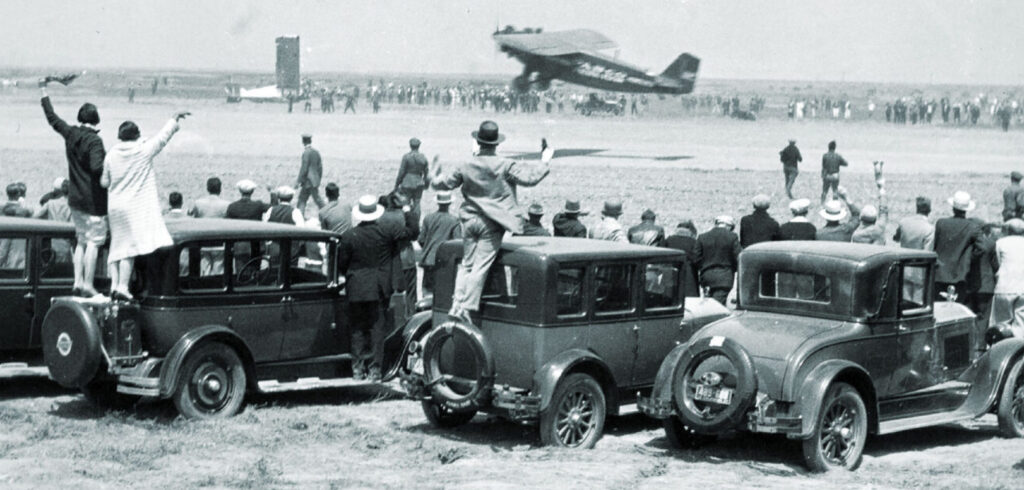
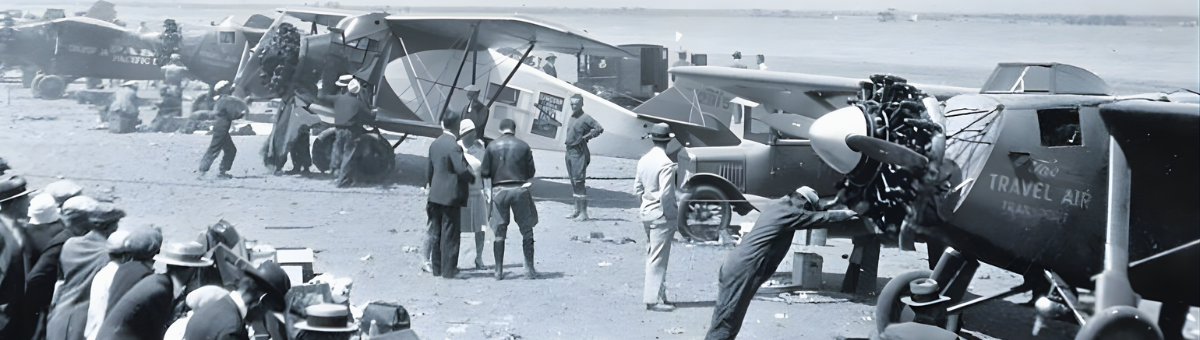
Despite the foreboding start to the race, eight aircraft took off from Oakland Field in California. Those aircraft were the:
- Woolaroc with pilot Arthur C. Goebel and navigator William V. Davis, flying a Travel Air 5000
- Aloha with pilot Martin Jensen and navigator Captain Paul Schluter, flying a Breese-Wilde 5 Monoplane
- Golden Eagle with pilot Jack Frost and navigator Gordon Scott, flying a Lockheed Vega
- Miss Doran with pilot Auggy Pedlar and navigator Vilas R. Knope, as well as passenger Mildred Doran, flying a Buhl CA-5 Air Sedan
- Dallas Spirit with pilot William Portwood Erwin and navigator Alvin Eichwaldt, flying a Swallow monoplane
- Pabco Pacific Flyer with pilot Livingston Gilson Irving, flying a Breese-Wilde Monoplane
- El Encanto with pilot Norman A. Goddard and navigator Kenneth C. Hawkins, flying a Goddard Special Metal Monoplane
- Oklahoma, with pilot Bennett Griffin and navigator Al Henley, flying a modified Travel Air 5000
Planes That Crashed on Takeoff
The first airplanes were notoriously finicky. They needed frequent repairs, and because of that, most pilots brought their own tools on every flight. Unfortunately for the pilots and navigators, the temperamental nature of these airplanes didn’t stop for the Dole Air Race, and several of the contestants crashed on the runway, including the Pabco Pacific Flyer and the El Canto.
Planes That Returned to the Field
Of course, just because they took off doesn’t mean they stayed in the race very long. The Dallas Spirit and Oklahoma returned to the airport after experiencing concerning mechanical issues.
Planes That Disappeared
During the race, several aircraft disappeared and were never found, including the Golden Eagle, Miss Doran, and the Dallas Spirit. It’s important to note that the Dallas Spirit was repaired and did not rejoin the race. However, they did fly out to help locate any survivors from the Golden Eagle and Miss Doran, and that’s when they too were lost at sea.
The Winners of the Dole Derby
Of the four aircraft that flew over the Pacific Ocean toward Hawaii, only two made it to Honolulu. The first to land was the Woolaroc after flying for 26 hours and 15 minutes. The second to land was the Aloha after flying for 28 hours and 16 minutes. However, neither plane’s trip was without incident. The Woolaroc lost visual reference several times and nearly crashed into the ocean after stalling and spinning. Thankfully, Arthur was able to recover due to his previous flying experience as a stuntman.
The Aloha didn’t fare much better on its trip. The crew suffered many navigational setbacks, and while they landed safely, the plane was reported to have only four gallons of fuel left in its tanks.
The Event Garnered an Incredible Amount of Media Attention
The Dole Air Race was a huge event. It’s estimated that 50,000 people gathered in Oakland to watch the planes depart for Hawaii. In addition to the crowds, news crews captured the spectacle with hand-cranked motion-picture cameras and still cameras mounted on tripods.
In Hawaii on August 17th, excitement was in the air as the first plane landed and then the second. Crowds gathered, hoping to see all of the participants at Wheeler Field in Honolulu, but it was not to be. As the hours ticked by, it was clear that the Golden Eagle and Miss Doran weren’t going to arrive.
A search and rescue mission was soon organized, but nothing was ever heard from the Golden Eagle or Miss Doran again, and during the search, the Dallas Spirit was also lost.
How Many Lives and Planes Were Lost in the Dole Air Race?
All in all, 12 people lost their lives, and six planes were lost or damaged beyond repair, including an army search plane.
Were Any Safety Precautions Taken for the Dole Air Race?
James Dole tried to take safety into consideration. He wanted the race to be seen as legitimate and respectable. Entrants had to pay a $100 fee, which is the equivalent of almost $1,900 today. The race was also overseen by the American affiliate of the Federation Aeronautique Internationale, which was the officiating body for aviation competition across the globe, and the National Aeronautical Association (NAA).
All of the contestants and their airplanes were evaluated. The pilots and navigators had to be sufficiently skilled, and the airplanes had to have the fuel aboard to fly 2,400 miles with 15 percent of the fuel in reserve. At the time, these were considered very stringent rules, and two airplanes were disqualified because they didn’t meet the criteria. One of those airplanes was Miss Peoria. It was determined that the airplane would run out of fuel long before reaching Hawaii.
How Did the Dole Air Race End the Daredevil Period of Aviation?
The Dole Air Race made its mark on aviation in a terrible way. Twelve people died, and at the time, it was the worst loss of life and airplanes in the industry. People talked about it for years, and it highlighted the need for improved safety and equipment. It also stalled any further discussions about creating an air route from California to Hawaii until 1935. The Dole Air Show also got pilots and aviation professionals talking about safety first instead of fame and fortune first. It also inspired the Department of Commerce’s Aeronautics Branch, now the FAA, to create new aviation safety regulations and to take a more active role in air race safety.
When Did an Air Route to Hawaii Finally Become a Reality?
Pan Am created the first route to Hawaii in 1936, and it wasn’t without its critics. People still remembered the amazing loss of life from the Dole Air Race. However, the perils encountered during the Dole Derby meant that Pan Am took some precautions when designing the route and determining which types of aircraft to fly over the Pacific Ocean.
In fact, the first flights were flown in the Martin M-130 “Hawaii Clipper.” These airplanes flew mail and cargo, as well as eight or nine passengers. The airplane was a flying boat, meaning it could land on water and float. It also had a range of 3,200 miles and a service ceiling of 10,000 feet.
While Pan Am and its flying boats are no longer available, you can still fly the Dole Air Race route. This is because there are major airports in Oakland and Honolulu. To fly the route, you’d need to book a flight from Oakland San Francisco Bay Airport (OAK) to Daniel K. Inouye International Airport (HNL).