See a New Side of the Azores with a Trip to Pico, Portugal, Known for Its Wonderful White Wines
Do you love wine, history, and beautiful islands? Then, you might want to take a trip to Pico, Portugal. This island in the Azores archipelago is one of the most remote. In fact, one fable says that in Christopher Columbus’s time, it was the last outpost before you fell off the edge of the world. While that statement is amusing, the truth is that Pico is closer to major ocean weather systems and shipping lanes than it is to a major continent. In fact, Pico is so remote that it didn’t get its first mention until 1375 in the Catalan Atlas, about 105 years before the first Pico Island settlement would be built. However, if you love remote vacations, you’ll love Pico today. It still feels almost as remote as it did back in Columbus’s day. Let’s take a look at why this mountain island might just make the perfect location for your next vacation.
Traveling to Pico, Portugal
Traveling to Pico can be accomplished by air and by sea. The island is home to Pico Airport (PIX), which is located in Madalena. PIX sees about 177,000 passengers per year, with the busiest months being June, July, and August. The slowest months are November, December, and January. The airport is 112 feet above sea level. The runway is 5,725 feet long (1,745m) and 148 feet wide (45m). Flights into and out of the airport are often handled by Azores Airlines and SATA Air Açores. However, flying in on an international flight often means landing at John Paul II Ponta Delgada Airport (PDL) on São Miguel Island. Then, either take a charter flight or a ferry ride to Pico Island.
Montanha do Pico or Mount Pico: The Tallest Peak in the Azores
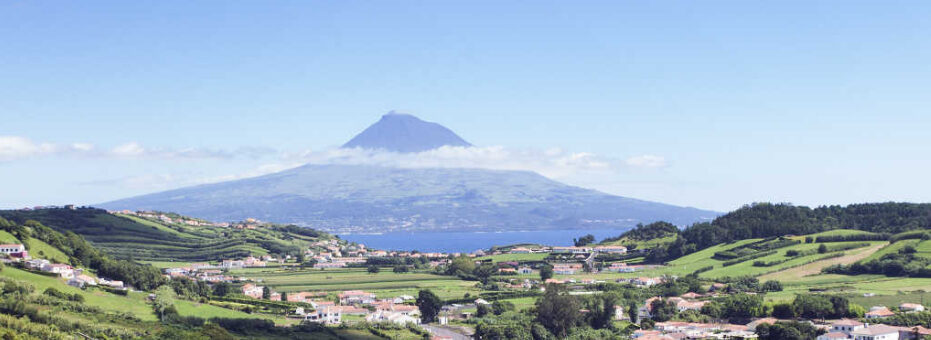
Pico Island is a volcanic island and home to the largest mountain in the Azores. Mount Pico rises 7,713 feet (2,351 meters), making it one of the highest peaks in the Atlantic. The mountain is a dormant stratovolcano, formed from alternating layers of lava and tephra. Tephra consists of material ejected during a volcanic eruption, ranging from fine ash to pebble-sized lapilli and even larger rocks or boulders. Today, the mountain draws hikers eager to tackle its slopes and enjoy panoramic views of the surrounding islands and the Atlantic Ocean. If you’re interested in hiking Pico Mountain, there is a trail called the Pico Mountain Trail that takes about six to eight hours to complete.
The Discovery of Pico
The exact date of Pico’s discovery is not known. What is known is that it was not inhabited until about 1480, and in addition to being mentioned in the Catalan Atlas, which is considered an extremely important world map for the Late Middle Ages, it was also mentioned in Cristoforo Soligo’s map in 1475.
However, just because people were arriving on the island, it didn’t mean that it was populated quickly. Those first inhabitants had an extremely difficult time growing wheat, which was needed for making bread, a staple of the European diet at the time.
However, that didn’t stop the settlers from planting Verdelho grapes, which are used for making white wine. While the wheat didn’t love the volcanic soil, the grape vines certainly did, and by 1695, the island was home to 9,000 people and several vineyards. By 1849, the island was home to 31,000 people. However, since that time, the population has decreased, and some grape varieties have been under pressure. Today, the island is home to just under 14,000 people, and there is a push to revitalize the wine industry and bring back a few historic grape varieties that were on the verge of extinction.
Visit the Wineries and Historic Vineyards
The wines of the island are internationally known. In fact, the island’s vineyards and wineries are part of a UNESCO World Heritage site, an honor they achieved in 2004. UNESCO specifically protects the vineyard landscape, which includes the vineyards and wineries built atop the volcanic terrain. Visitors can explore these centuries-old vineyards, where traditional cultivation methods among the lava fields produce the island’s famous white wines. Some of the wineries even use the old currias, which are built from lava stones and are used to help protect the vines from the wind.
Today, the island grows three types of grapes, including Arinto dos Açores, Verdelho, and Terrantez. The wineries and their vineyards are located on the Atlantic side of the island. Three of the most popular wineries on the island include Azores Wine Company, Pico Wines, and Tito’s Adega.
Azores Wine Company
The Azores Wine Company was founded in 2014 with the goal of reviving Terrantez do Pico, a grape variety that nearly went extinct. In fact, the goal of this environmentally and historically conscious winery is to revive rare and endangered grapes. Today, its Rare Grape Collection includes wines made from Boal, Arinto dos Açores, and Vinha dos Aards. The winery is also open to visitors and offers guided tours and tastings.
Pico Wines
Ilha do Pico is a wine cooperative that was founded in 1949. It has 270 associates who help grow the grapes. Those grapes are then hand-picked and turned into the winery’s wonderful wines. Some Pico Wines include Gruta das Torres, Rola Pipa, Verdelho, Terras de Lava Syrah, and 20 Anos. The winery is unique in that it offers more than just white wines. They also have red, rose, sparkling, and fortified wines. The winery participates in wine tourism and offers tastings.
Tito’s Adega
A Tito’s Adega is a unique winery where it’s rumored that the first vines were planted by friars. In fact, the plot of land where the vineyard and winery occupy is known as Friars Fence. The current founder of Tito’s Adega bought the property in 2015. He started his winery journey by planting three hectares, or 7.4 acres, with the island’s most revered grape varieties, including Terrantez do Pico, Arinto dos Açores, and Verdelho grapes. By 2017, they had restored 15 hectares, or 37 acres. Today, the winery offers several specialty wines, including Terrantez do Pico 2021, Verdelho 2021, and Arinto of the Azores 2021. If you’re interested in sampling their wines, they offer wine tastings at their waterfront location.
Experience Whale Watching
Pico is known for its historic whaling industry, and visitors to the island can charter a boat to go whale watching. The best whale watching is said to be from April through October. Whale watching trips can last anywhere from a few hours to a week or two. All you have to do is choose your preferred trip.
Visit Gruta das Torres
If you’re looking for a large lava tube, it’s the Gruta das Torres, located in Criação Velha, which is about a 10-minute drive from Madalena. The tube measures 16,896 feet in length (5,150m). This particular lava tube is believed to have formed during an eruption around the year 526 AD. The tours of the tube take guests down 1,400 feet (450m) of the tube. Guests are provided with safety gear. The lava tube is generally open from October through April.
Where to Eat on Pico Island
In addition to having great wines, Pico Island also has a few wonderful places to eat. A few favorites include the Magma Restaurant Bar and Mar Sushi Terrace.
Magma Restaurant Bar
The Magma Restaurant Bar serves lunch and dinner. Guests can choose from a variety of meats, including pork, beef steaks, chicken, and fish. The restaurant is extremely popular for dinner due to the spectacular sunsets. Because of that, it is recommended to make a reservation two days in advance for dinner.
Mar Sushi Terrace
The Mar Sushi Terrace is known as one of the best places to eat on Pico Island. They serve a variety of wonderful sushi that uses only locally caught fish. During the peak season, they are known to serve more than twelve different types of local fish.
Finding the Right Accommodations
Pico offers plenty of places to stay. After all, it is the second-largest island in the Azores. When it comes to picking the right accommodation, many people choose to stay in Madelena because it is close to the airport, dining, and marina. A few places that guests gush about include Alma de Pico, Pico Studios, and Vinhas do Calhau. Alma de Pico is beloved because these private studios are located in a forest. It’s quiet, stunningly beautiful, and offers mountain views.
Guests love Pico Studios because they offer all the amenities of home in cozy spaces. Guests can enjoy a living area, kitchen, private bathrooms, air conditioning, and WiFi. Vinhas do Calhau has wonderful apartments that are pet friendly. Guests can enjoy a sea view, an outdoor swimming pool, and an on-site restaurant.
If you’re looking for an island vacation that’s a little bit out of the way, you’ll love Pico Island. There are plenty of outdoor activities, from hiking and boating to exploring the island’s volcanic geology. It’s a great place to relax, unwind, and enjoy a glass of locally produced wine.